
Quick Summary
Hook choice shapes hookup ratio as much as bait selection does on Lake Okeechobee. Worm hooks, offset hooks, jig hooks, treble hooks, and circle hooks each serve a specific presentation, and sizing runs on two separate scales depending on hook size. Matching wire strength and point sharpness to bait and target fish cuts down on missed strikes, and routine care like rinsing and checking for rust keeps tackle performing trip after trip.
A day out on Lake Okeechobee fishing can turn on one small piece of gear tied to the end of your line. Hooks for bass fishing come in a range of shapes and sizes. Choosing one that fits your bait and technique affects how long a fish stays on before shaking free at the boat.
At Roland Martin Marina & Resort, our dock sits along water known for producing big largemouth bass. Questions about tackle come up almost daily from anglers gearing up before heading out. This guide walks through the basics: hook anatomy, common styles, sizing, and a few care tips that keep your tackle box ready for the next trip.
Choosing Good Hooks for Bass Fishing
Every hook has a few parts worth knowing before you tie one on. The point is the sharp end that sets into a fish’s mouth. The shank is the straight section running from the point to the eye, where the line ties on. The bend is the curved section that connects the two and determines how the hook sits inside a bait.
A sharper point means fewer missed strikes, and a properly sized bend keeps bait sitting naturally in the water rather than curling up on itself. None of this needs to feel complicated once you break it down piece by piece.
Common Hook Styles Anglers Rely on
Different presentations call for different hook shapes. Here’s a rundown of styles you’ll see most often on tackle shop shelves:
- Worm hooks: Straight-shank hooks designed for soft plastic worms, often with a slight bend near the eye to hold bait in place
- Offset worm hooks: Small bend just below the eye that lets you rig soft plastics weedless, ideal for fishing near grass and cover
- Jig hooks: Heavier hooks welded or molded to a jig head, built for bottom bouncing and structure fishing
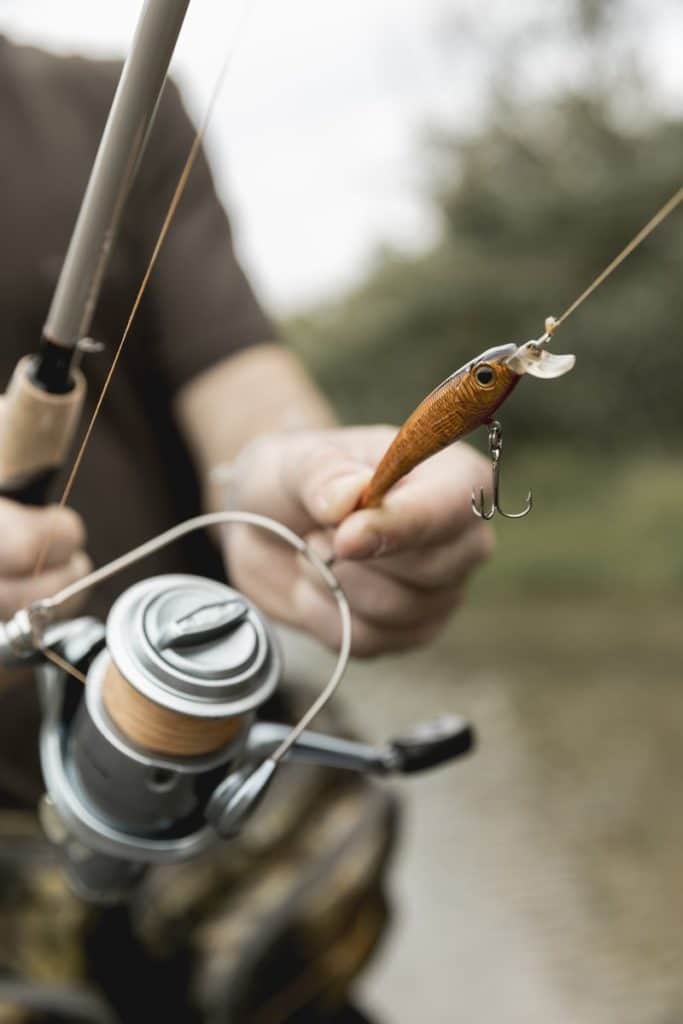
- Treble hooks: Three points fused together, common on crankbaits and topwater lures
- Circle hooks: A curved design that sets in the corner of a fish’s mouth, popular with live bait anglers who want a cleaner release
Our bass fishing guides spend their days matching hook style to conditions, and that kind of on-the-water experience is worth tapping into if you’re new to the lake.
Hook Sizes and What the Numbers Mean
Hook sizing trips up plenty of anglers because the system runs backward. Smaller numbers without a slash, like size 8 or size 2, get larger as the number goes down. Once you reach size 1, the sizing flips to an aught system, written as 1/0, 2/0, and so on, and these get larger as the number goes up.
A size 6 or 4 hook works well for finesse presentations and smaller soft plastics. A 2/0 to 4/0 hook is suitable for standard worm and jig fishing for largemouth bass. A 5/0 or bigger hook comes into play with bulkier swimbaits or when targeting larger fish with heavier bait.
Line strength, bait size, and target fish should all factor into the decision. A hook too small won’t set properly in a bigger fish’s mouth, and a hook too large can make smaller bait look unnatural in the water.
Matching Hooks to Your Bait and Technique
Pairing the hook to the presentation makes a noticeable difference in hookup ratio. A few common pairings:
- Texas rig with soft plastic worm: offset worm hook, sized to the bait
- Flipping jig around cover: heavy-wire jig hook with a strong bend
- Live shiner or wild bait: circle hook, sized to the bait’s mouth
- Topwater plug: factory treble hooks, checked and sharpened before use
- Drop shot rig: light-wire hook that lets the bait move freely
Checking our bass fishing reports before a trip gives a sense of what bass are keying on that week, which helps narrow down bait choice and, in turn, which hook makes sense to tie on.
Hook Care Keeps Your Tackle Box Ready
Hooks don’t last forever, especially around saltwater or brackish conditions near a marina. Rust forms quickly on hooks left wet in a tackle box, and a rusted point won’t penetrate a fish’s mouth the way a fresh one does. Running a thumb across the point before a trip quickly tells you whether it needs replacing or just a few strokes with a hook file.
Bent hooks happen too, usually after a fight with a solid fish or a snag pulled free from cover. A bent hook changes how bait sits and how well the point sets, so swapping it out takes only a minute and can save you from a missed fish later. Rinsing hooks after saltwater exposure and drying tackle before storage reduce rust buildup between trips.
Plan Your Next Trip on Lake Okeechobee
Hooks for bass fishing don’t need to be a mystery once the basics click into place. A little attention to style, size, and condition goes a long way toward more fish in the boat and fewer lost at its side.
Questions about tackle, techniques, or planning a stay on the water? Get in touch with our team at Roland Martin Marina & Resort and let’s start putting a trip together.
FAQs
What size hook works best for largemouth bass?
A 2/0 to 4/0 hook covers standard worm and jig fishing for largemouth bass. Bigger swimbaits or heavier bait call for a 5/0 or larger.
What's the difference between a worm hook and an offset worm hook?
A worm hook has a straight shank suited to soft plastics. An offset worm hook adds a small bend near the eye, which allows a weedless rig near grass and cover.
Why do circle hooks work well with live bait?
Circle hooks set in the corner of a fish’s mouth instead of deep inside it. This makes for a cleaner hook set and an easier release.
How often should hooks be replaced?
A hook needs replacing once the point feels dull or the shank shows a bend. Checking tackle before each trip catches these issues early.
Does saltwater exposure affect bass fishing hooks?
Saltwater and brackish water speed up rust formation on hooks left wet in a tackle box. Rinsing and drying hooks after each trip slows this process considerably.