
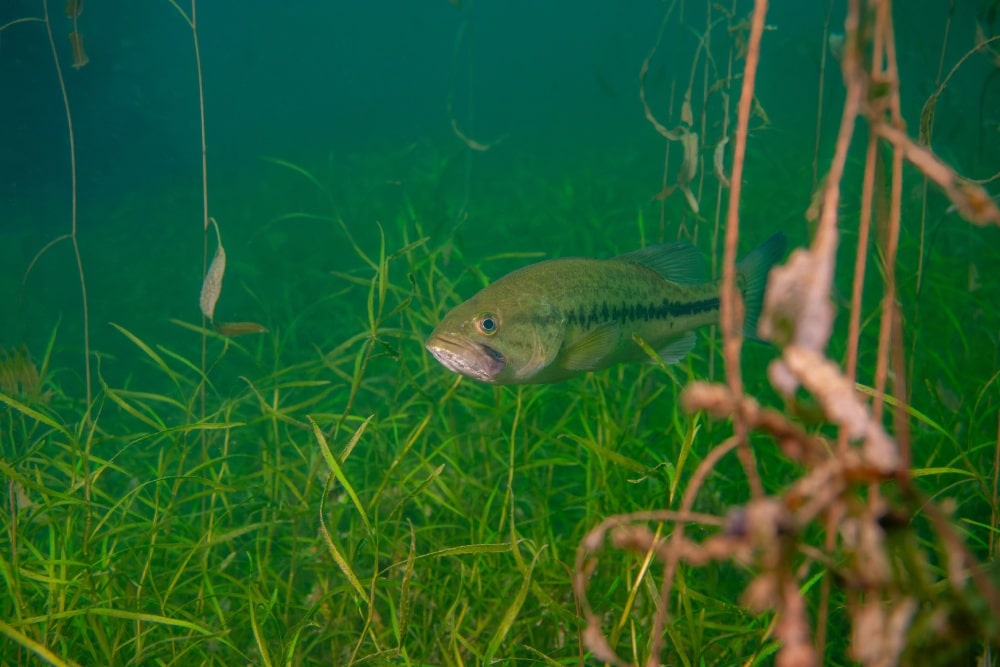
Every visit to Lake Okeechobee introduces you to a remarkably productive freshwater ecosystem filled with opportunities for anglers of all skill levels. When you plan a trip focused on the variety of Lake Okeechobee fish species, you enter a landscape shaped by vegetation, structure, and thriving forage populations.
Your experience on the water can shift from fast action to trophy-level encounters depending on the season and your approach.
Largemouth Bass: The Lake Favorite
Different anglers travel to Lake Okeechobee with the goal of targeting largemouth bass because the species offers steady action and strong fights across a wide range of conditions.
During most months of the year, you can locate bass along grass lines, reed edges, hydrilla fields, and submerged structures where forage is abundant. These areas provide a mixture of cover and ambush points that support consistent fish behavior.
When water temperatures rise in early spring, bass move into spawning zones in shallower water. This brings them closer to anglers and creates more reliable bite opportunities. During summer and fall, they spread into slightly deeper edges but remain active in the early morning and late afternoon. Anglers often use soft plastics, topwater lures, lipless crankbaits, and swimbaits to match the seasonal movements.
The lake’s size and habitat diversity also make it possible to experiment with various approaches and still find productive water. If you study vegetation lines, wind direction, and bait presence, you increase your chances of locating larger fish that define the lake’s reputation.
Crappie Speck Fishing Opportunities
Crappie are a favorite during cooler months because they form tight schools and respond well to simple presentations. In late fall, the fish move into deeper basins, channels, and pockets near structural changes. These schools often remain stable for several weeks, so anglers can return to the same areas with consistent success.
These groups often remain stable for several weeks, so you can return to the same general area and keep catching fish with consistent results. Light spinning setups combined with small jigs, soft plastics, or live minnows help you cover water efficiently while maintaining a natural presentation.
Slow vertical jigging or gentle drifting often produces the best results when the fish remain slightly suspended or tightly grouped around subtle cover.
Bluegill And Shellcracker Appeal
Countless families and casual anglers choose to target bluegill and shellcracker because these panfish offer accessible and steady fishing in numerous shallow zones around the lake. During the warm months, you can locate them along reeds, grass beds, and sandy bottom areas where they feed aggressively on insects, small crustaceans, and worms.
These species respond well to simple rigs such as small hooks with live bait, micro jigs, or lightweight floats, which allow precise placement within tight cover. In spring, bluegill and shellcracker form bedding colonies in protected pockets and gently sloping shorelines. Observing water clarity, bottom contours, and bedding patterns helps identify active spots.
During peak periods, you can experience fast action with repeated bites as fish defend their nests. Throughout the summer and early fall, panfish remain plentiful around vegetation lines where subtle movements often reveal schools feeding in the shade.
Catfish Options For Steady Action
Catfish offer year-round fishing with simple rigs and commonly used bait types. Channel catfish and bullhead varieties roam throughout the lake, providing reliable bite opportunities. Productive areas include deeper channels, the edges of large flats, and slightly stained water.
Bass fishing guides offer personalized on-water instruction that improves your chances of success.
Gar And Bowfin Encounters Explained
Many anglers encounter gar and bowfin while pursuing other species and are often surprised by their remarkable strength and sudden aggression. These fish inhabit a broad range of environments across the lake, creating unpredictable but exciting battles when hooked.
Using heavier leaders, careful patience, and a steady retrieve can significantly increase your chances of successfully landing these powerful and challenging species.
Why This Lake Stays Productive
Countless factors contribute to the ongoing productivity of the lake, including vegetation, water quality, and diverse forage systems. As you explore Lake Okeechobee fish species, you gain access to environments that support healthy populations throughout the year. This combination offers you a reliable and rewarding fishing experience across all seasons.
Our team at Roland Martin Marina & Resort provides lodging, dining, and guide services that support your time on the water. Bass fishing reports help visitors understand seasonal trends and locate active areas on the lake.
Visit Roland Martin Marina & Resort today to book your stay and start planning your next unforgettable fishing trip.